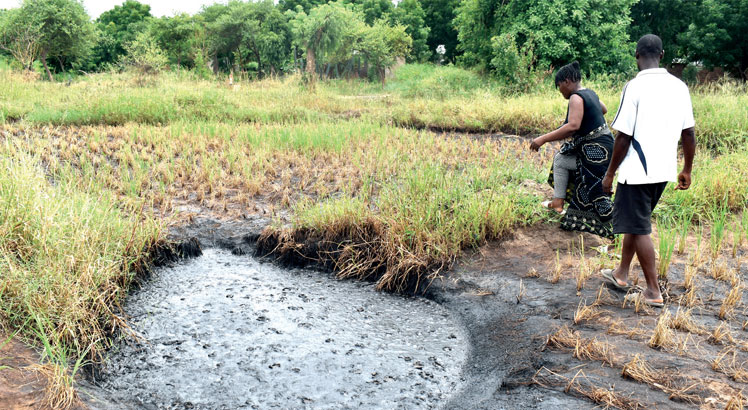
Trucks hauling molasses to PressCane Limited at Dyeratu in Chikwawa District could be a signal of a looming reopening of the ethanol distillery at the centre of Malawi’s worst pollution in decades.
The company ferments the waste product from Illovo Sugar plc’s factory at Nchalo Estate, 30km southwards, to produce fuel and industrial ethanol.
However, the factory fell silent in January this year when the Malawi Environmental Protection Authority suspended its operations following the spill of its acidic wastewater into the environment.
As trucks from Nchalo sugar mills turn right to deliver molasses to the sealed distillery, onlookers wonder whether PressCane is doing enough to fix the effects of air, land and water pollution.
“For weeks, we have seen trucks bringing molasses, which gives an impression that government is about to reopen the ethanol company, but we haven’t seen much effort to assess the damage, compensate affected families and clean up, as ordered by Mepa,” says community-based activist Lovemore Jambo.
PressCane is a joint venture between the listed conglomerate, Press Corporation Limited (PCL), largely owned by Malawi Government, and the privately- owned Cane Products Limited.
For three months, PCL, listed on the Malawi Stock Exchange in 1998, has kept mum on the pollution scandal by its subsidiary.
Greenwashing?
The conglomerate supports environmental initiatives, including highly publicised Press for Nature, which rewards communities for planting and nurturing trees.
Environmentalists find it ironic that Press Corp supports tree planting and sustainable business practices while counting profits from a company with a history of toxic pollution, which wipes out vegetation.
To them, this could be greenwashing—a marketing tactic where companies use vague language or embellished claims to make audiences believe their products, services or policies are environment-friendly or sustainable just to maximise profits, disguise high-impact environmental damage and evade accountability.
The Nation asked PCL chief executive Ronald Mangani to explain the silence, including how the conglomerate is addressing the pollution scandal by its subsidiary.
Breaking the silence, he could not give a clue on the possible reopening of the company, hoping Mepa’s pardon comes soon.
Stated Mangani: “We have supported the company’s board and management to reach out to authorities to explain our story and commitment to adhere to all orders from regulators.
“I have personally supported the board to arrange high-level meetings at the ministerial level to lobby that the order be reversed, as processes are underway to address the environmental concerns and ensure the affected population gets compensation.”
He ruled out greenwashing, which is akin to a hotel asking guests to reuse beddings and towels to save water while the main goal is to cut laundry costs.
Mangani argued that the company is investing heavily in an organic fertiliser factory as part of a zero-liquid discharge system to avert pollution.
“As early as 2021, we saw the need for sustainable waste management and that is why we are investing in the zero-liquid discharge, which is ready for commissioning within three months once authorities reopen the ethanol factory.”
PressCane has postponed the opening of the K10 billion fertiliser plant due to what the Press Corp chief termed a tough economic climate.
“We are already implementing a lasting solution to this issue because we are very particular and sensitive to the environment. If we weren’t, we wouldn’t be investing in the discharge into organic fertiliser instead of keeping it in ponds,” said Mangani.
The ethanol factory ferments molasses, clearing Illovo Sugar’s waste stockpile. However, every spill from a dozen waste ponds at Dyeratu suggests that the ethanol producer has no clue how to manage the fast-accumulating discharge from its distillery sustainably.
Public interest first?
The locals say increasing the number of ponds has failed to safeguard them from chronic spills for over a decade amid calls for State regulators to act boldly.
In a written interview, Mepa director general Wilfred Kadewa says the public institution was established to serve public interest, “particularly by creating a safer and clean environment for all”.
He states: “We take to task any entity—whether a government agency or non-governmental organisation, public or private, individuals or institution—that fails to comply with the environmental standards.
“Therefore, our allegiance is ensuring that Malawians, regardless of where they live, enjoy a clean and healthy environment, and conduct themselves in a manner that ensures sustainable utilisation of our natural resources.”
TOMORROW: Children have on the waste pollution scandal. How?